01Brief
Magic had a mockup on their homepage. An AI pair programmer, refactoring code. Their own note said it didn't solve a real problem. Fix it.
The ask was specific. Show how an AI pair programmer should collaborate with a developer inside the editor. It refactors. It improves maintainability, quality and testability. Open ChatGPT, try co-writing code with it, and name the problems.
I did. The problems weren't in the editor.
The deck opened with a what if. Generative AI generating code, with interaction as the way into team problem solving. Concept only. Not complete, not meant for market.
02Mess
Spring 2023. Every AI was a chat box. Ask, answer, repeat.
Call and response starts as an earnest attempt at conversation. Then the turns get obvious and it goes cold.
The code was getting good. That wasn't the issue. Nobody trusts a voice with no name, no face, and no sense of how you work. And the rest of the team doesn't even know it's there.
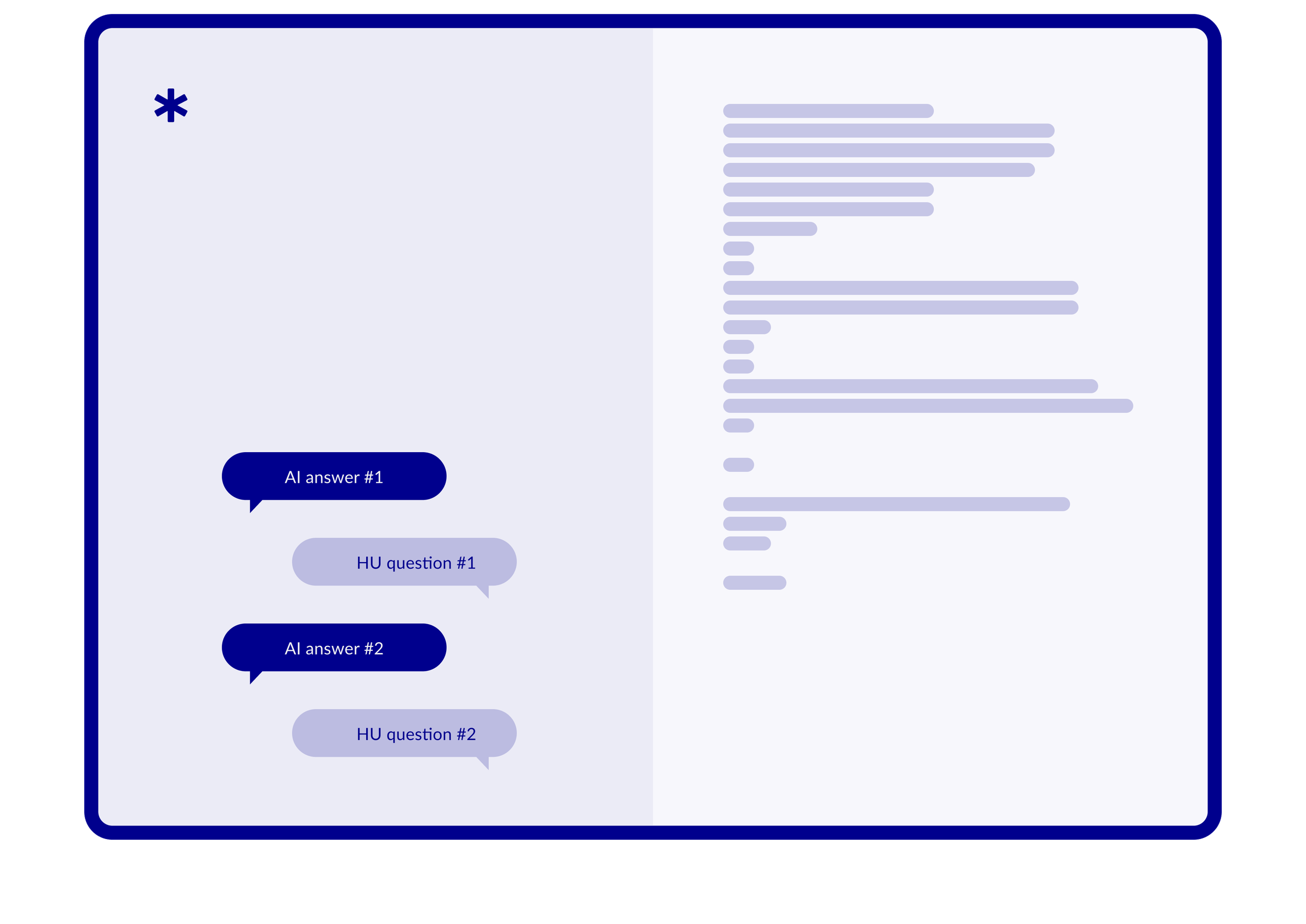
Efficiency without a relationship is just a faster text box.
03Options
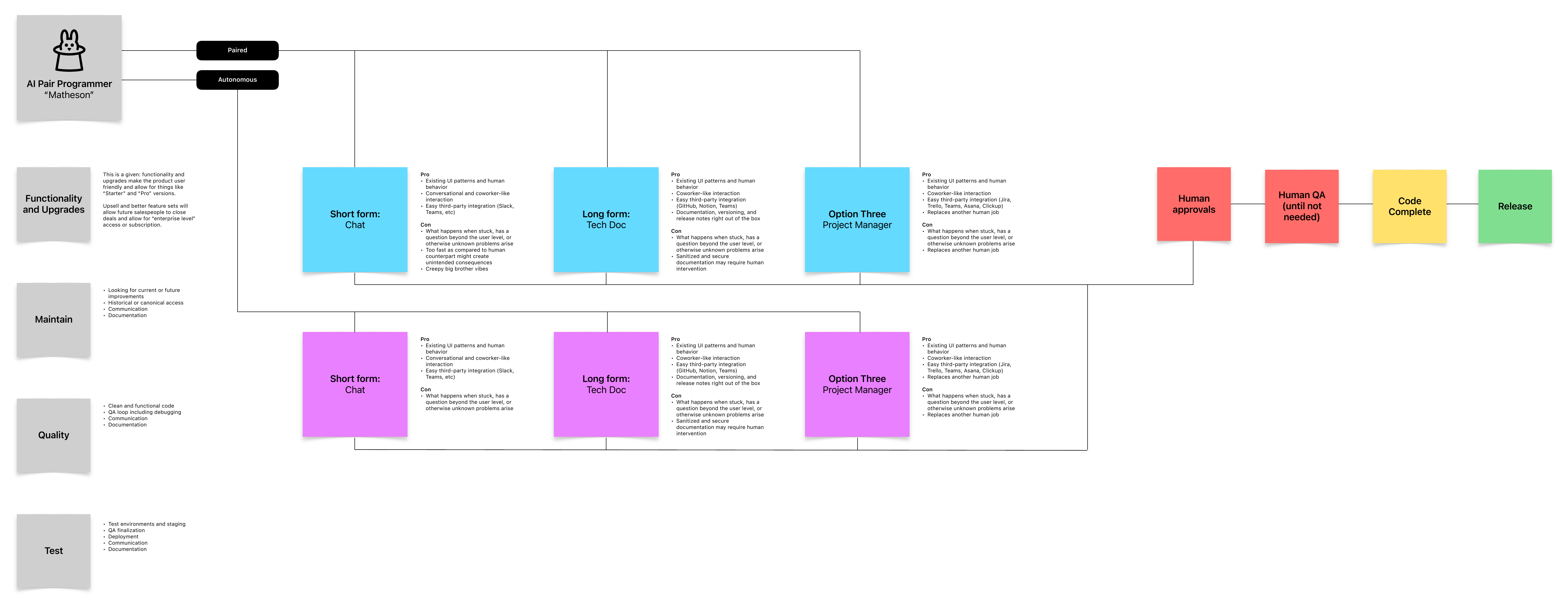
Three ways in, each with pros and cons.
Chat. Familiar. Coworker-like. Plugs into Slack and Teams. The risk: it's too fast for its human counterpart. Creepy big brother vibes.
Tech doc. Documentation, versioning and release notes out of the box. The risk: sensitive docs still need a human.
Project manager. Plugs into Jira, Asana and ClickUp. The risk: it replaces a human job. I listed that as a pro and a con. Still true.
All three shared one open question: what happens when it gets stuck?
Two modes sat on top: paired and autonomous. Then a pipeline: maintain, quality, test. Human approvals. Human QA "until not needed."
04Make
Four moves, each one a step further from the chat box.
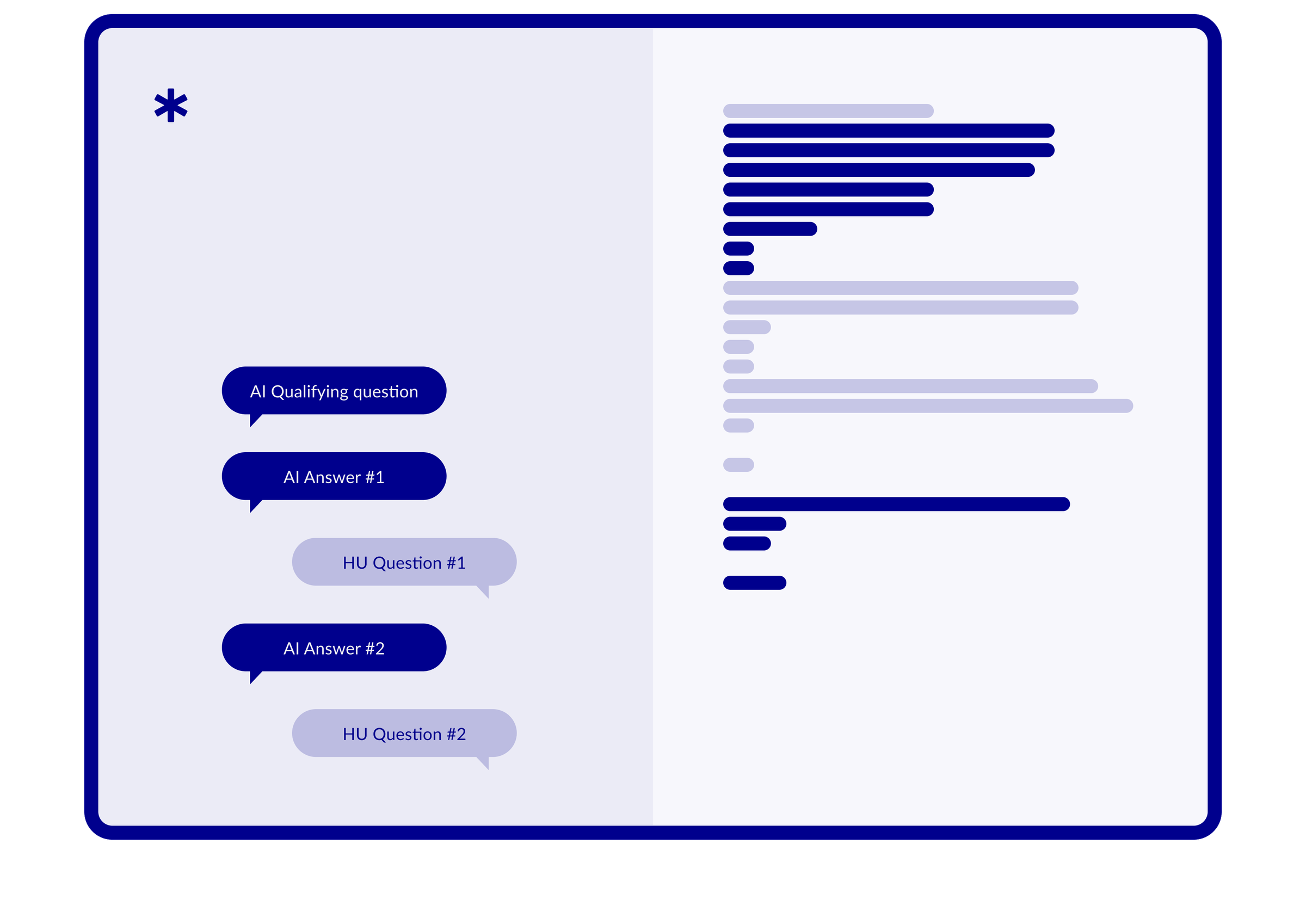
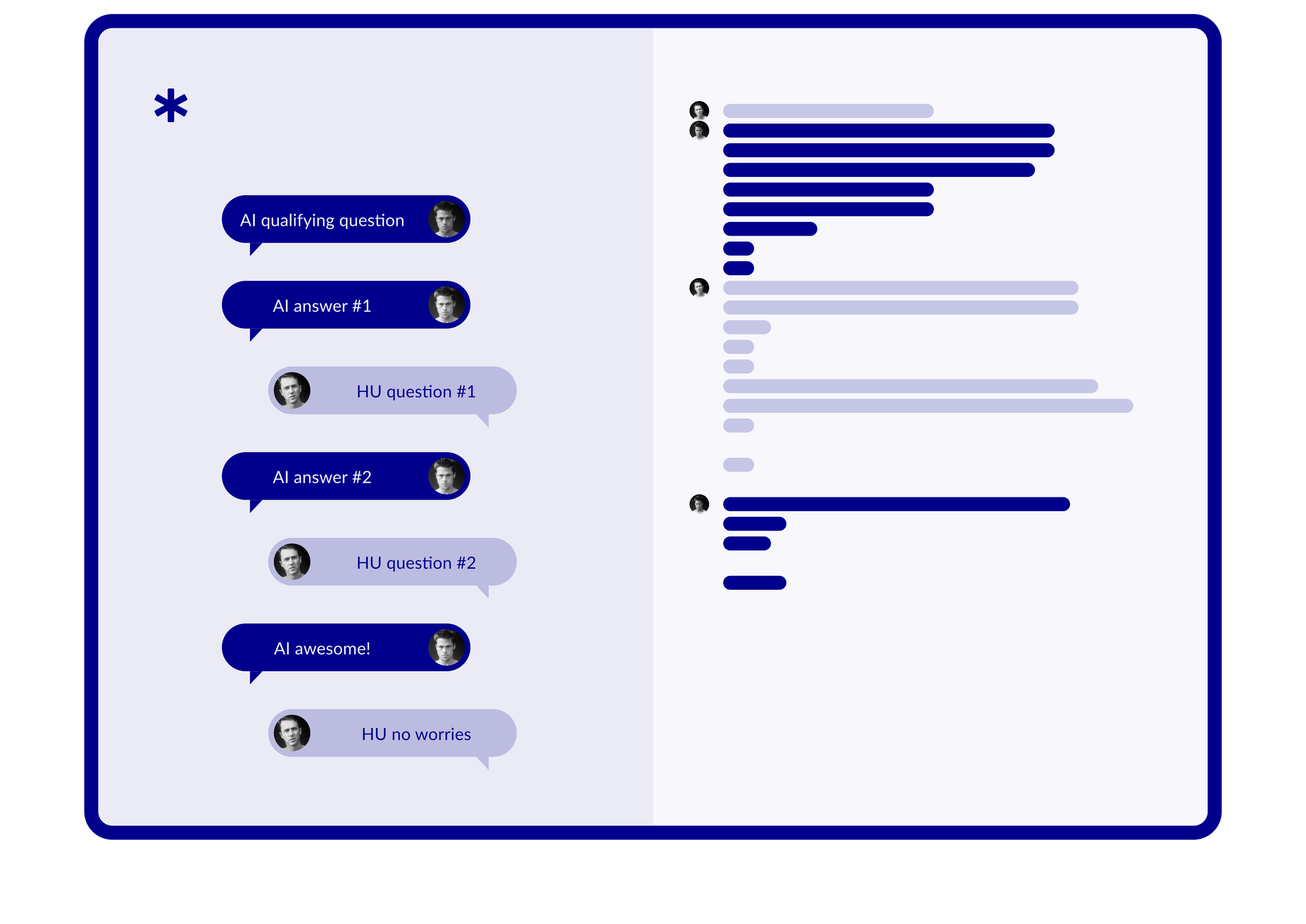
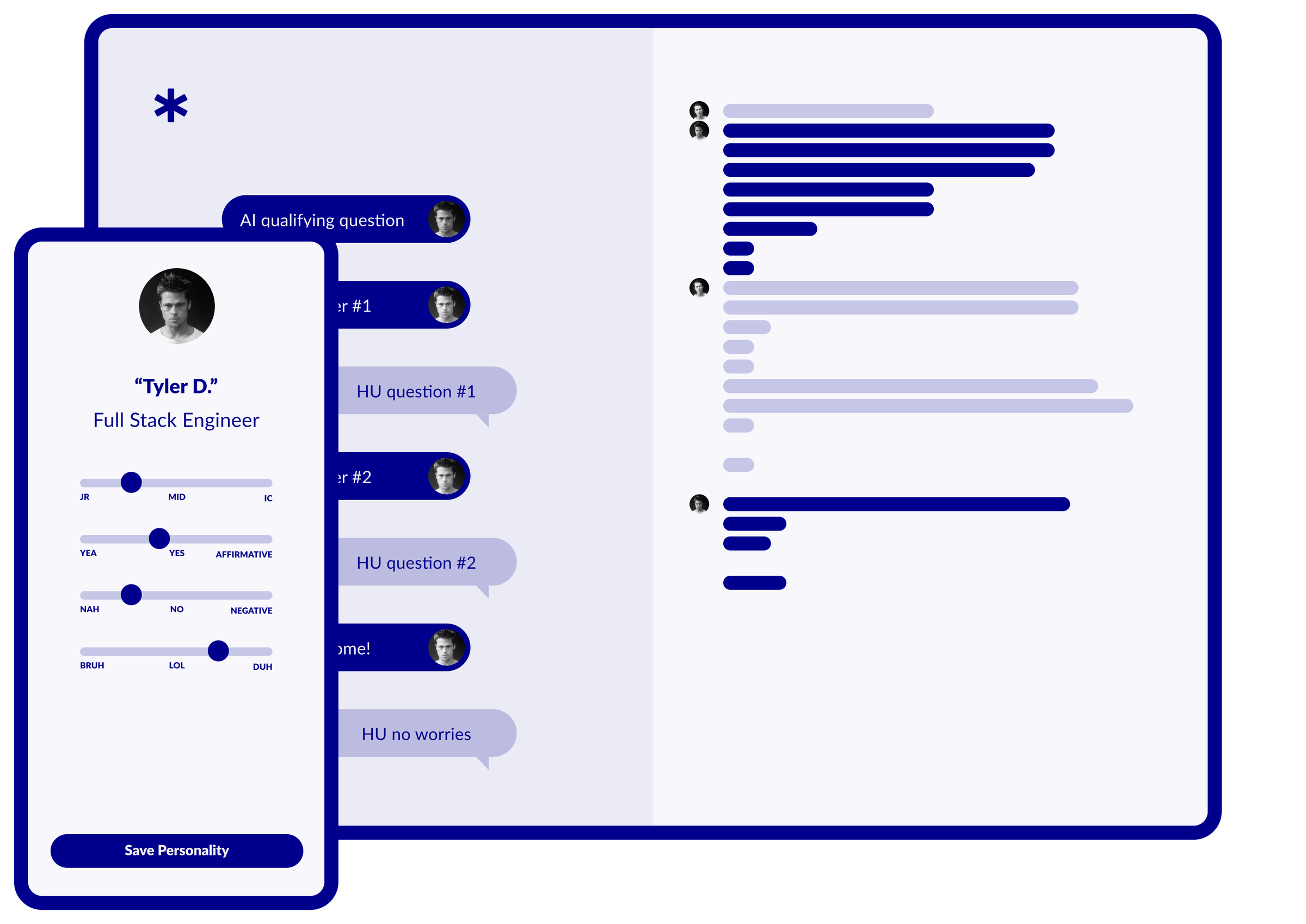
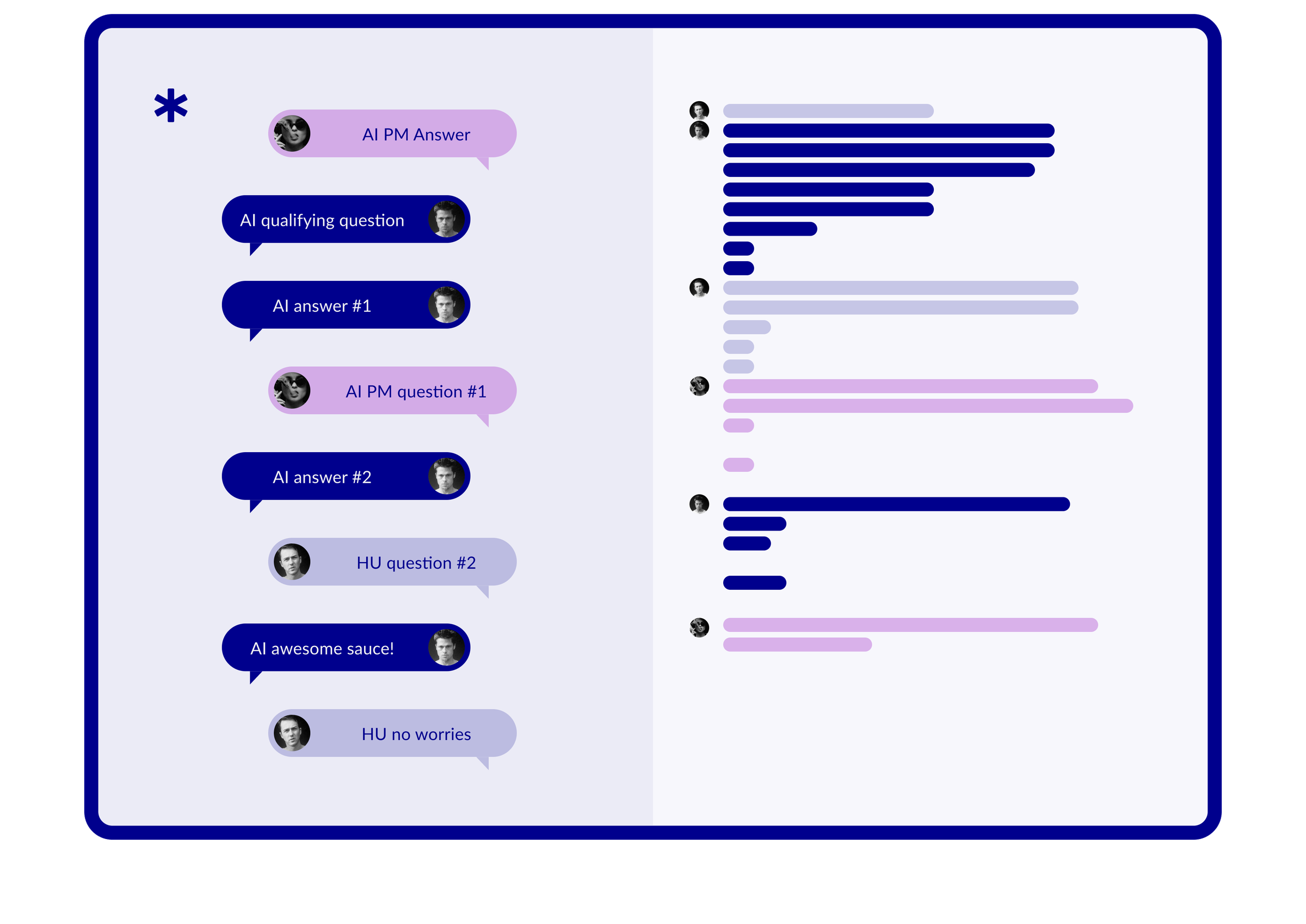
Give it a name. The bot became Mathison. Personality isn't just casual language. It's dialogue prompts and turn ratios, like any developer on the project. A named teammate asks whether code is ready for QA instead of waiting to be told.
Give it a break-in period. Like any new dev. Junior or senior? How do they talk?
Let people tune it. Sliders for seniority and tone, from "yea" to "affirmative," from "nah" to "negative," from "bruh" to "duh." Save the personality. Change it anytime, from feedback in the moment or at onboarding.
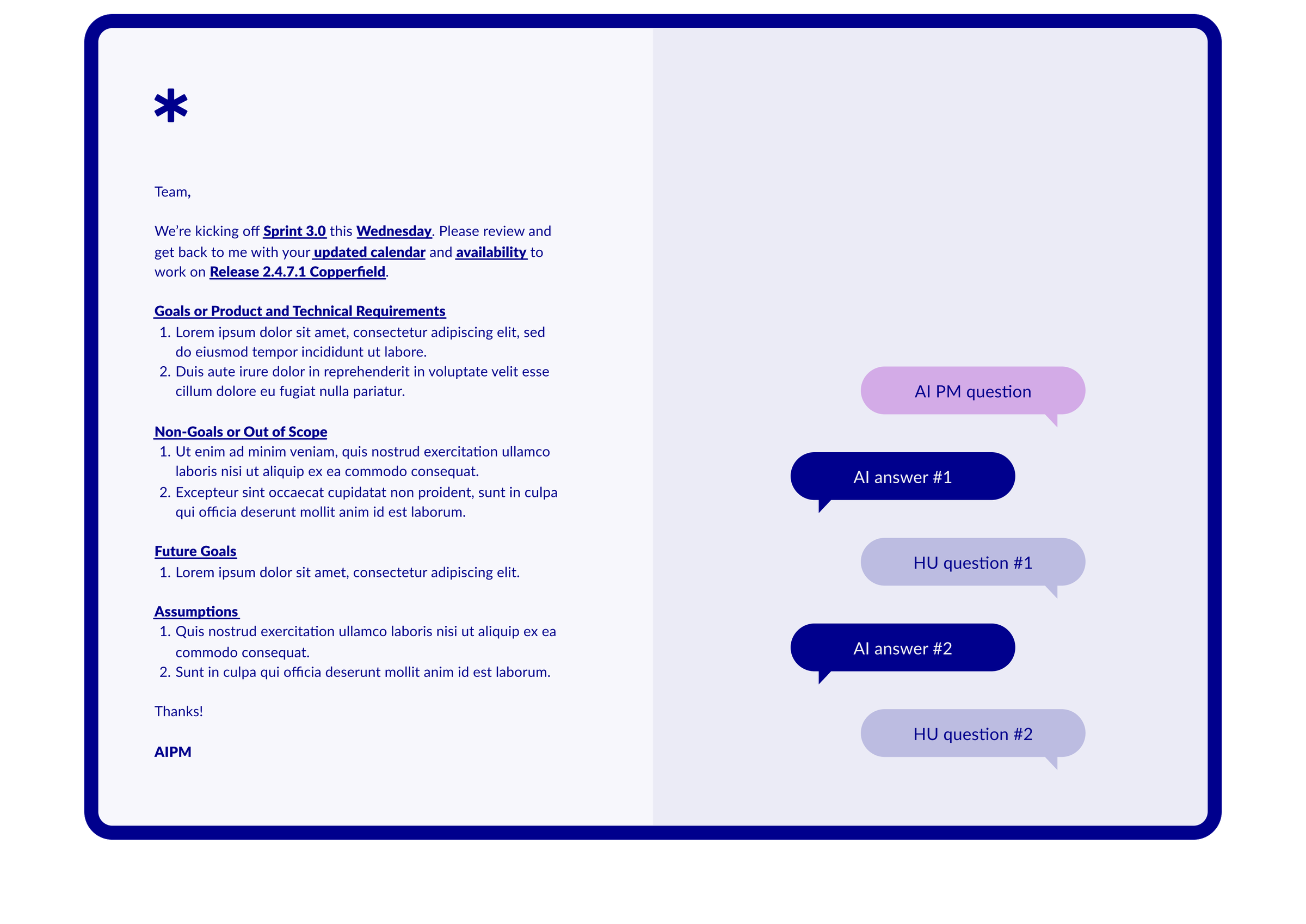
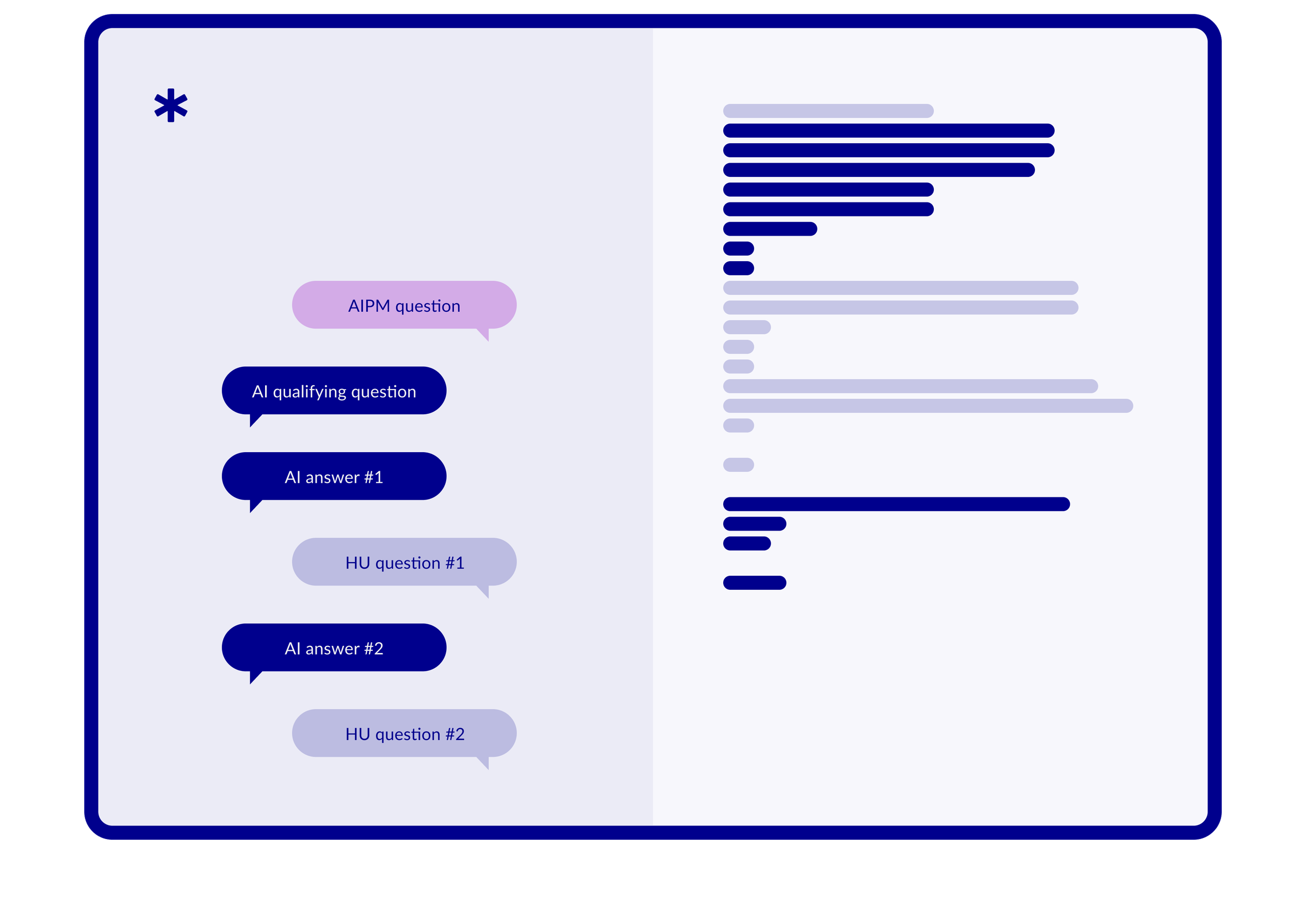
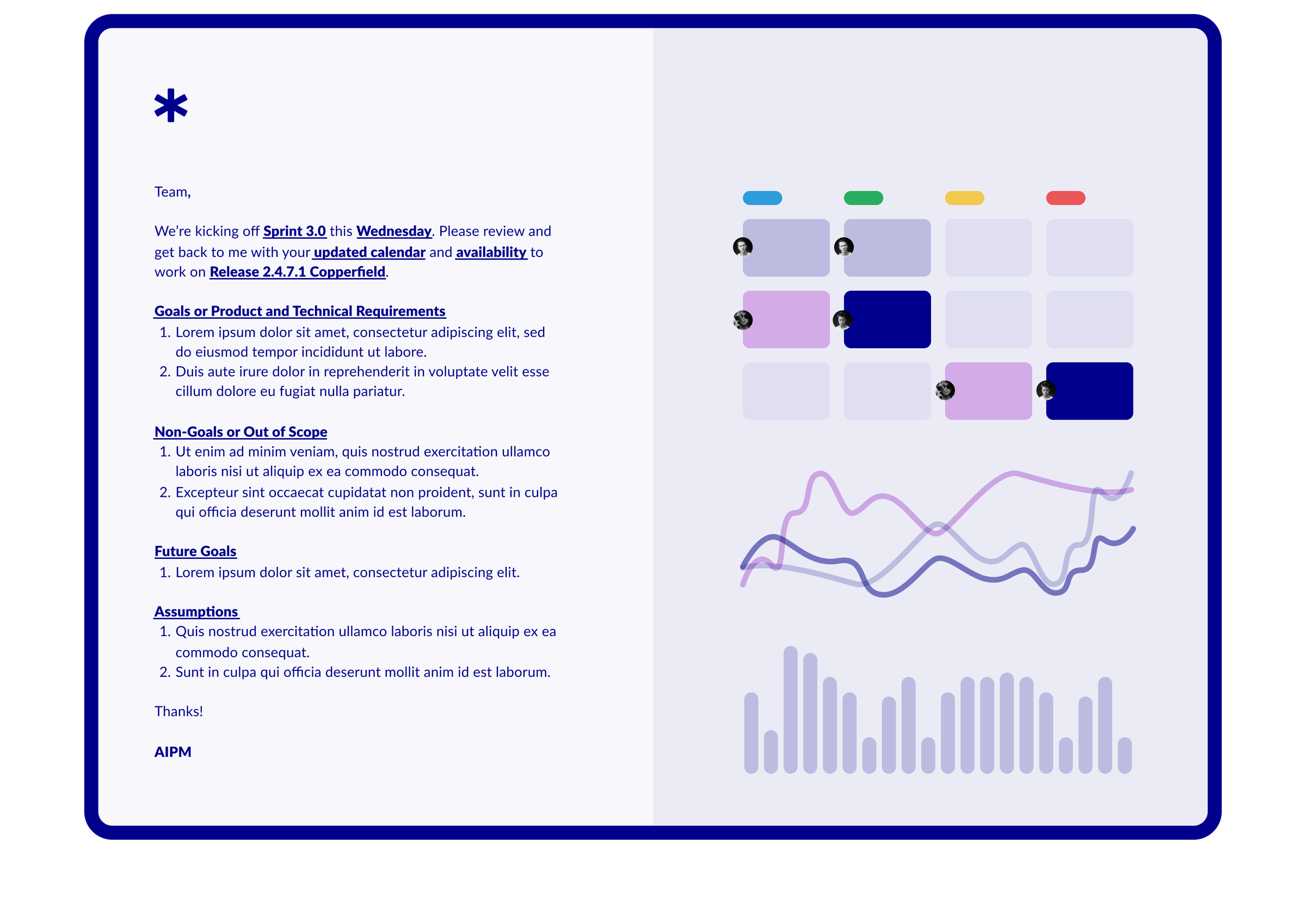
Give it a manager. An AI project manager writes the sprint kickoff, tracks the timeline and plugs into Jira or ClickUp. It takes ownership of a process that was all on humans. The whole team benefits, even people who never open the chat.
That was the stickiness missing from every AI tool in 2023.
05Bet
The brief started in the editor. I started with the team.
Who the agent is. How it fits a team. Who it answers to. Editor patterns would come, and they did. Inline diffs are table stakes now. The relationship was the harder problem, and it still is.
06What it changed
Agents have names now. They take tickets, open pull requests and post in Slack. Teams tune how they talk. The questions on those slides became roadmaps.
By late 2024 I was the founding designer at Distyl, building a design system made for Claude Code to read and build from. Software that builds software stopped being a slide title. It was the job.